
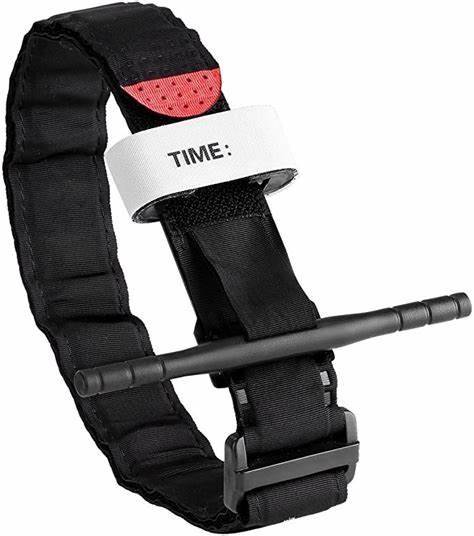
Description
A tourniquet is a life-saving medical device designed to apply circumferential pressure to a limb, compressing blood vessels against the bone to completely halt blood circulation below the band.
- Emergency Trauma Care. First responders and bystanders use emergency tourniquets (such as windlass or pneumatic cuffs) as a critical intervention for severe, life-threatening limb hemorrhage, deep lacerations, or amputations when direct pressure fails. [
- Surgical & Clinical Use. Surgeons use pneumatic tourniquets to create a bloodless operating field during orthopedic or limb surgeries, while phlebotomists use simple elastic bands to distend veins when drawing blood.
- Application & Safety. In emergencies, a tourniquet is placed on bare skin 2 to 3 inches (5 to 7.5 cm) above the wound—never over a joint—and tightened until bright red bleeding stops. Because prolonged restriction of blood flow can cause nerve or tissue damage, the time of application is always recorded, and the device is left in place until a medical team can safely remove it, ideally within two hours.


Reviews
There are no reviews yet.